Making Vegan cider at home is easy. Why not give it a go yourself?
Disclaimer: This page contains affiliate links. When you purchase through our link, we may earn a small commission at no extra cost to you.
There’s something deeply satisfying about making your own cider — especially when you know exactly what’s in it. For anyone living a vegan or plant‑based lifestyle, homemade cider is one of the easiest, most budget‑friendly drinks you can create. No hidden ingredients, no animal‑derived finings, no guesswork. Just apples, yeast, and a little patience.
In this guide, I’ll walk you through how to make a clean, crisp vegan cider at home using simple equipment and ingredients you can buy online or in any UK supermarket.
🍎 Why shop brought Cider is sometimes not Vegan
Cider should be vegan by default; it’s just fermented apple juice. But commercial brands sometimes use:
- Isinglass (fish bladder)
- Gelatin
- Chitin (from shellfish)
- Cochineal (insect‑derived colouring)
- Honey (as a sweetener)
Here’s what to watch for:
- Potassium sorbate (E202) — stops fermentation
- Sodium benzoate (E211) — also inhibits yeast
- Honey‑sweetened ciders
- Finings like gelatin or isinglass used for clarity
- Cochineal (E120) used for colour in some fruit ciders
When in doubt, choose 100% apple juice with no preservatives — it’s the safest option for vegan fermentation.
Note: Some store‑bought apple juices contain preservatives like potassium sorbate, which stop fermentation entirely.
When you make cider at home, you control every ingredient — and everything in this recipe is 100% vegan.
🍐 Ingredients for 5 Litres of Vegan Cider
🍏 Option 1: Using Fresh Apples
(Perfect if you want a traditional, full‑flavoured cider)
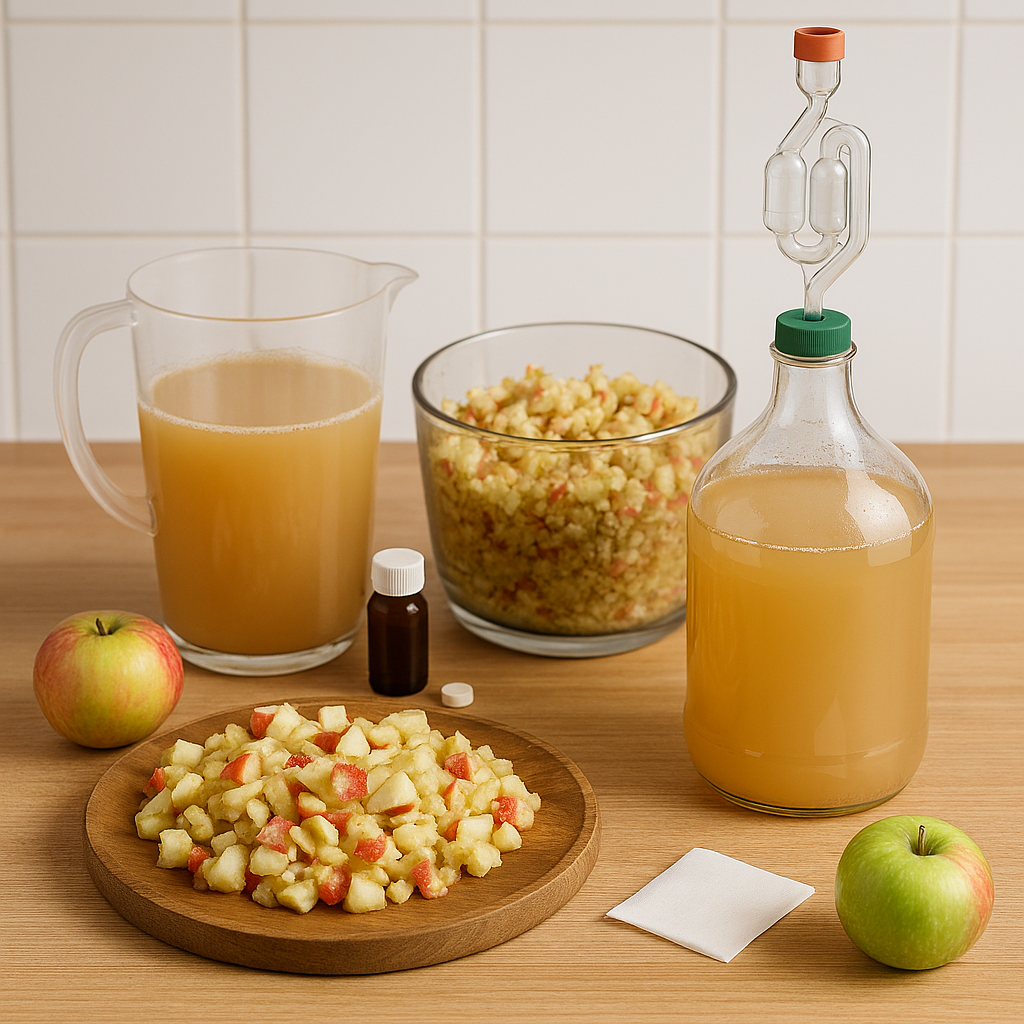
- 10–12 kg fresh apples — around 50–60 medium apples
- 1 Campden tablet — optional, for sterilising
- 1 sachet cider or wine yeast (approx. 5g)
- Sugar for carbonation — ½ teaspoon per 500ml bottle
- Steriliser — as directed.
🍎 Option 2: Using Shop‑Bought Apple Juice
(The easiest method — just make sure it’s vegan‑friendly)
- 5 litres 100% apple juice — no potassium sorbate or sodium benzoate
- 1 Campden tablet — optional
- 1 sachet cider or wine yeast (approx. 5g)
- Sugar for carbonation — ½ teaspoon per 500ml bottle
- Steriliser — as directed
- Water
🍺 Equipment You’ll Need
- 5L PET demijohn / glass demijohn with grommeted cap
- Airlock
- Steriliser
- Siphon
- Bottles (swing‑tops or beer bottles)
🧪 Vegan Ingredient Table
| Ingredient | Vegan? | Notes |
|---|---|---|
| Apples / apple juice | Yes | Pure fruit; avoid juice with preservatives that stop fermentation. |
| Yeast | Yes | Fungal microorganism, always vegan. |
| Sugar | Yes | UK sugar is vegan; no bone char used. |
| Campden tablets | Yes | Chemical sulphite, no animal products. |
| Water | Yes | Safe. |
| Airlock / equipment | Yes | No animal-derived materials. |
🍏 Step‑by‑Step: How to Make Vegan Cider
1. Sterilise Everything
Cleanliness is everything in cider making. Sterilise your demijohn, airlock, and any utensils.
2. Prepare Your Juice
Pour 5 litres of preservative‑free apple juice into your demijohn. If you’re using fresh apples, press them first — but supermarket juice works beautifully.
3. Add a Campden Tablet (Optional)
Crush 1 Campden tablet and add it to the juice. This kills wild yeast and bacteria. Leave for 24 hours.
4. Add Your Yeast
Sprinkle 1 sachet of cider or wine yeast into the demijohn. Fit the airlock. Fermentation usually starts within 24–48 hours.
5. Let It Ferment
Store somewhere around 18–22°C. Fermentation lasts 1–3 weeks, depending on temperature and yeast.
6. Bottle Your Cider
Siphon into bottles, leaving sediment behind. For sparkling cider, add ½ teaspoon sugar per 500ml bottle before sealing.
7. Age It
Leave bottles for 2–4 weeks to mature. The flavour smooths out beautifully with time.
🍏 The Equipment I’m Using for This Batch (with links to purchase):
Here are the exact items I’m using to make my vegan cider:
- Bigger Jugs Pair of 5 Litre PET Demi-Johns with Caps, Grommets and Airlocks
- Cider or wine yeast
- Campden Tablets (resealable pack)
These three items are all you need to get started with clean, reliable, vegan-friendly fermentation.


2 Comments on “How to Make Vegan Cider at Home”
Comments are closed.