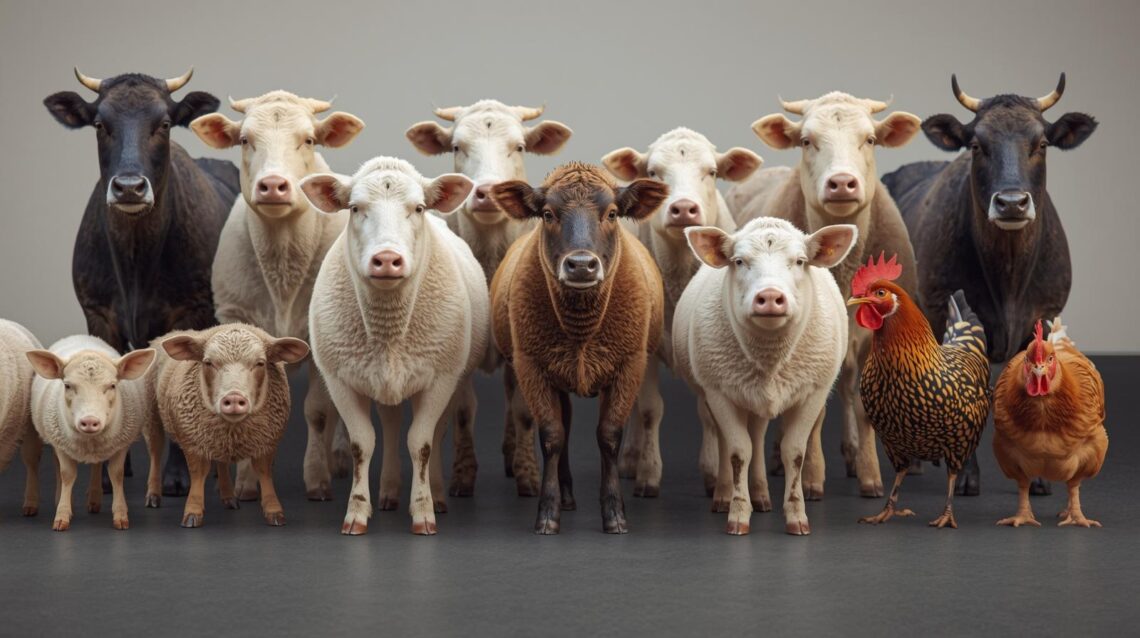
One of the most inspiring aspects of veganism is the number of lives spared through everyday choices. While the exact figures vary depending on the source, the message is clear: going vegan saves animals—hundreds each year, thousands over a lifetime.
Daily and Yearly Estimates
- The Vegan Calculator suggests: “Every day as a vegan you save one animal life” — that’s around 365 animals per year.
- Vegan Slate estimates: “You save roughly 265 animal lives every year by going vegan.”
- The Vegan Society’s Veganalyser, using UN Food and Agriculture Organisation data, provides more conservative figures, but still shows thousands of animals spared over a lifetime.
- The Humane League UK highlights that the average person in the UK consumes up to 10,000 animals in a lifetime — including billions of chickens and trillions of fish globally.
These differences arise because some calculators include fish and sea animals, while others focus only on land animals.
Beyond Diet: A Lifestyle of Compassion
The NHS explains: “A vegan diet is based on plants… Vegans do not eat foods that come from animals, including dairy products and eggs”【source】. But veganism is more than diet—it extends to clothing, self‑care, cleaning products, and materials. Each choice reduces demand for animal exploitation.
Why Estimates Differ
- Scope of animals counted: Some include fish and sea life, others only land animals.
- Regional diets: Consumption patterns vary by country.
- Data sources: UN FAO, USDA, and independent studies all use different baselines.
That’s why these numbers should be seen as estimates, not absolutes.
Inspiring Takeaway
Even with conservative estimates, the impact is profound. Saving hundreds of animals per year means that over a decade, one person can spare thousands of lives. As the Vegan Society reminds us, “There is no one way that suits all”—but every step counts.
Disclaimer
These figures are estimates only. They depend on consumption patterns, data sources, and whether sea animals are included. The purpose is to inspire, not to provide exact statistics.