
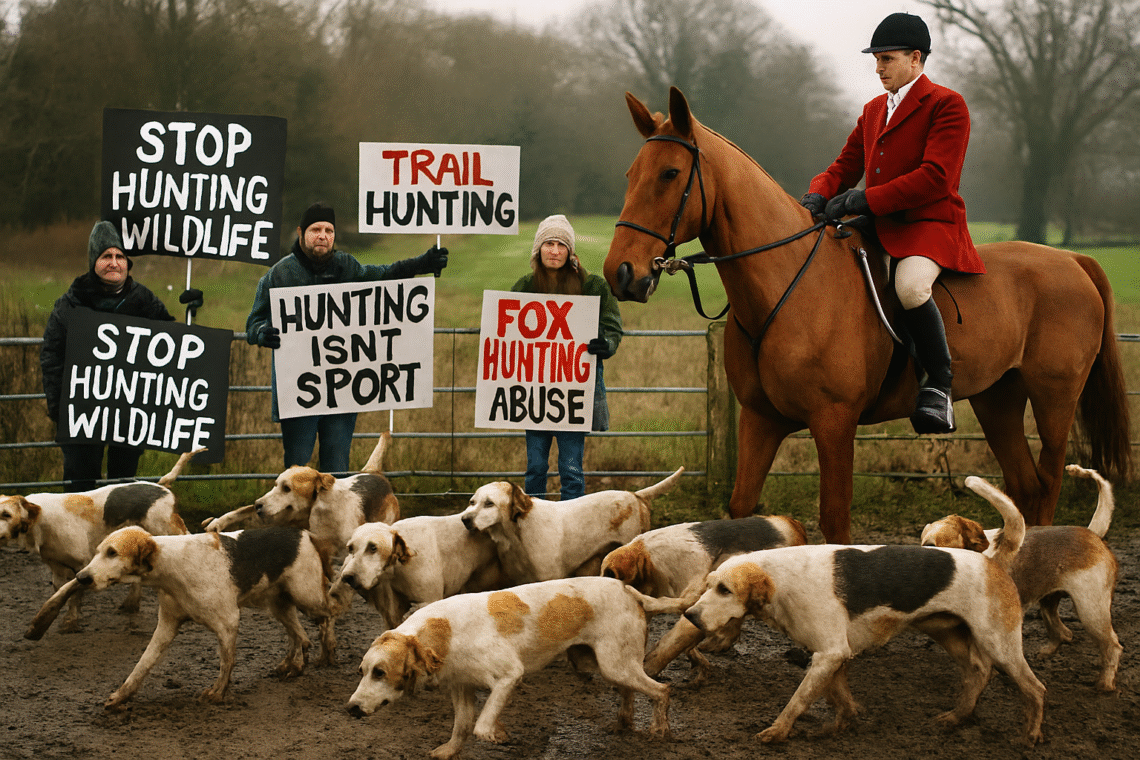
For years, trail hunting has been defended as a harmless rural pastime — a neat workaround introduced after the 2004 fox‑hunting ban. But the truth has always been far messier. The UK Government has now confirmed plans to ban trail hunting entirely, citing overwhelming evidence that it has been used as a smokescreen for illegal fox and wildlife hunting.
This is more than a policy update. It’s a long‑overdue acknowledgement of what animal‑protection groups, monitors, and vegans have been saying for decades: cruelty dressed up as tradition is still cruelty.
Trail Hunting: A “Legal” Loophole That Never Was
Trail hunting was supposed to involve hounds following a pre‑laid scent — often fox urine — instead of chasing a live animal. But evidence gathered over multiple seasons shows that hunts routinely used this setup to mask illegal wildlife persecution.
Anti‑hunting organisations recorded nearly 1,600 incidents in a single season, including 397 foxes actively pursued by hounds. These numbers expose the scale of abuse hidden behind the façade of legality — a reality vegans and animal‑rights advocates have been calling out for years.
This is why the Government has now stated clearly that trail hunting has been used as a “smokescreen” for chasing and killing wild animals.
Who Fought for This Change?
The ban didn’t appear out of thin air. It is the result of relentless pressure from charities, grassroots groups, and everyday people who refused to let wildlife crime be normalised.
Key forces behind the shift include:
- League Against Cruel Sports — whose field monitors documented hundreds of illegal pursuits and exposed systemic abuse.
- Animal welfare charities — who campaigned for years to close loopholes that allowed hunts to operate with impunity.
- Vegan activists and wildlife advocates — who consistently challenged the narrative that hunting is “tradition” rather than violence.
- Political allies pushing for reform — with the ban forming part of the Government’s new animal‑welfare strategy.
This is a victory built on persistence, evidence, and compassion.
What the Ban Means in Principle
At its core, the ban recognises a simple truth: animals should not be chased, terrorised, or killed for entertainment.
In principle, the ban:
- Closes the loophole that allowed hunts to claim they were following a scent while actually pursuing live animals.
- Strengthens wildlife protection by removing a legal cover for illegal hunting.
- Signals a cultural shift away from bloodsports and toward ethical coexistence with wildlife.
- Aligns with broader welfare reforms — including bans on snares and puppy farming — under the Government’s new strategy.
For vegans, this is a meaningful step toward a society that recognises animals as sentient beings, not props for rural spectacle.
Where the Ban Will Actually Protect Animals
While the principle is powerful, the real‑world impact matters most. Here’s where animals will genuinely benefit:
- Foxes — the primary victims of illegal hunting — will face significantly reduced risk of being chased and killed.
- Other wildlife, such as hares, deer, and badgers, will be safer, as hounds often “accidentally” pursued them during trail hunts.
- Hounds themselves — frequently injured, abandoned, or killed by hunts — will be spared from being used as tools of cruelty.
- Local ecosystems will experience less disruption from packs of hounds tearing through habitats.
This ban won’t solve every issue overnight — enforcement will still matter — but it removes the legal shield that allowed hunts to operate with near‑total impunity.
A Vegan Perspective: Why This Matters
From a vegan standpoint, this ban is more than a policy win. It’s a cultural milestone.
It acknowledges that:
- Animals have intrinsic value, not entertainment value.
- Tradition cannot justify harm, no matter how old or romanticised.
- Compassion is a legitimate basis for law, not an emotional inconvenience.
For those of us who have long advocated for animals — whether through activism, writing, or simply living our values — this moment is a reminder that change is possible when evidence, ethics, and persistence align.
The Work Isn’t Over
The ban is a turning point, but not the finish line. Hunts may attempt to rebrand, resist, or exploit new loopholes. Continued monitoring, public pressure, and political will are essential to ensure the ban delivers the protection animals deserve.
But today, we can acknowledge something important: the truth about trail hunting has finally been recognised at the highest level.
And that matters — for foxes, for wildlife, and for everyone who believes that compassion should shape the world we build next.



One comment on “Trail Hunting Is Being Banned — What This Really Means for Animals”
Comments are closed.