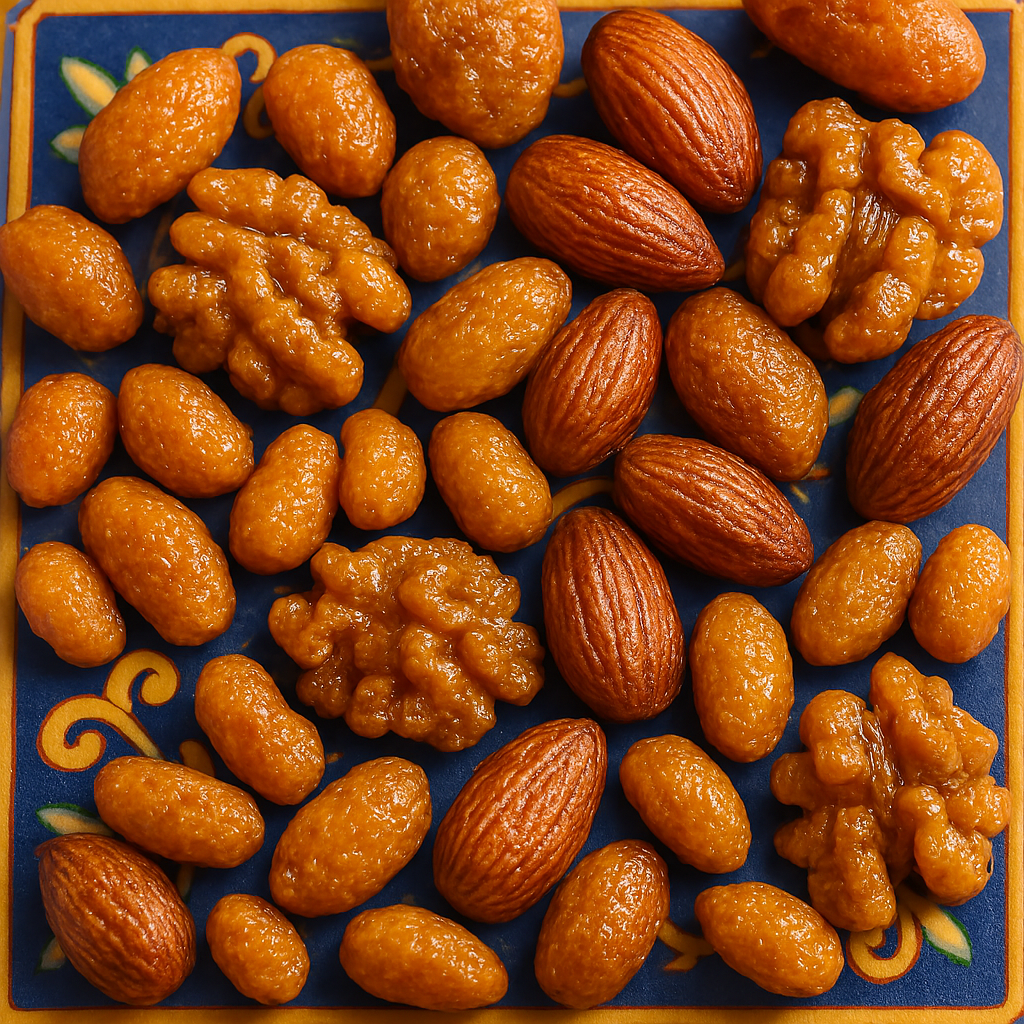
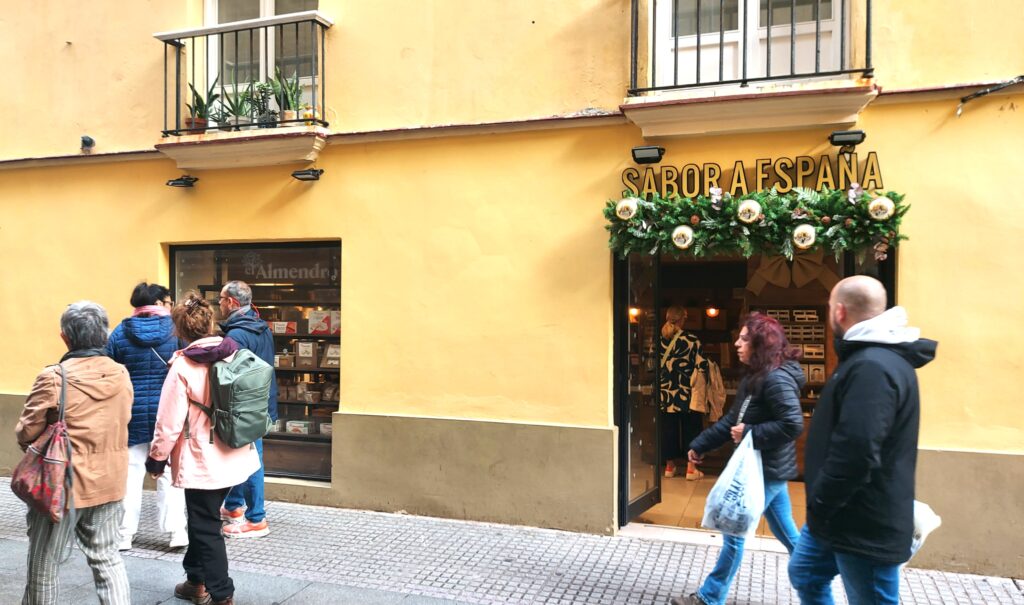
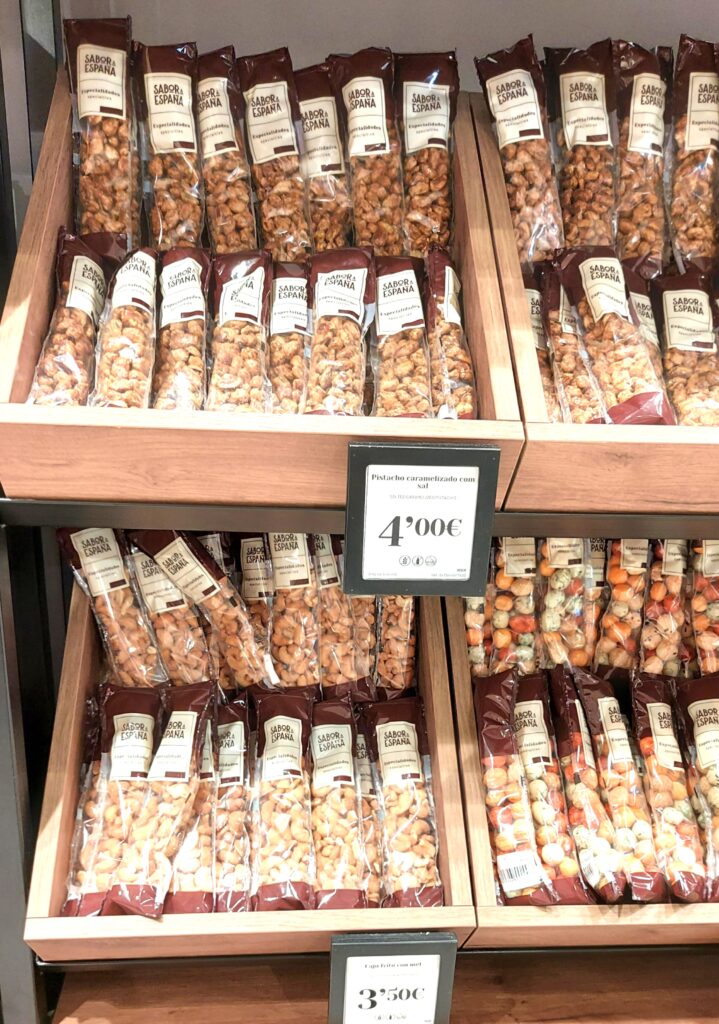
I was wandering down a chilly December street in Cádiz, wrapped up against the sea breeze, when a warm, sweet smell drifted through the air and stopped me in my tracks. It was coming from a little shop called Sabores de España, its windows glowing with trays of glossy, caramel‑coated nuts.
The moment I tasted them, I was transported. The flavours were magical and unmistakably Christmassy — cinnamon, toasted sugar, and that deep, old‑fashioned warmth you only get from simple ingredients treated with care. They reminded me of Victorian Christmas treats, back when festive sweets were made from just nuts, sugar, spice, and patience. No additives, no fuss — just pure, nostalgic deliciousness.
When I got home, I couldn’t shake the memory of those nuts. So I set out to recreate that moment in my own kitchen, and in the process rediscovered a Spanish tradition that’s as comforting as it is timeless. I tried my first handful of Spanish sugar‑coated nuts — almendras garrapiñadas — and instantly fell in love.
Crunchy, glossy, warm, and impossibly moreish, they tasted like childhood fairgrounds and cosy winter markets all at once. So when I arrived back home, I knew I had to rediscover that experience in my own kitchen.
This blog is my little love letter to those nuts: their history, their regional twists, and the simple recipe that lets you recreate them wherever you are.
✨ A Sweet Spanish Tradition: The History of Sugar‑Coated Nuts
Sugar‑coated nuts have been part of Spanish food culture for centuries. The technique — slowly cooking nuts in sugar until it crystallises — is believed to have Moorish origins, much like many of Spain’s most iconic sweets.
Over time, the treat became especially popular at:
- Festivals and fairs
- Christmas markets
- Town celebrations (fiestas)
Different regions developed their own flavour signatures, turning a simple recipe into a tapestry of local traditions.
Here’s a quick tour of how flavours change across Spain:
- Catalonia – cinnamon‑heavy garrapiñadas with a slightly darker caramel finish
- Madrid – classic white‑sugar versions with a sandy, crunchy coating
- Andalusia – hints of citrus zest or vanilla for a brighter flavour
- Castilla y León – deeply toasted almonds with a more rustic, smoky sweetness
- Basque Country – walnuts and hazelnuts are more common than almonds
It’s amazing how one simple technique can express so much regional personality.
🍯 The Classic Spanish Sugar‑Coated Nuts Recipe
This is the traditional method used by street vendors — simple, quick, and magical to watch.
Ingredients
- 1 cup raw nuts (almonds are traditional, but peanuts, walnuts, or mixed nuts work beautifully)
- 1 cup white sugar
- ½ cup water
- ½ tsp cinnamon (optional but very Spanish)
Instructions
- Combine everything in a wide pan. Nuts, sugar, water, and cinnamon all go in together.
- Heat gently until the sugar dissolves. Stir occasionally as it becomes a bubbling syrup.
- Keep stirring as the syrup thickens. Suddenly, the glossy syrup will turn into a sandy, crystallised coating. This is the magic moment.
- Continue cooking until the sugar re‑melts slightly. The nuts will become shiny and caramelised — that signature Spanish finish.
- Spread onto baking paper to cool. They harden into crunchy perfection within minutes.
🌈 Flavour Variations to Try at Home
Once you’ve mastered the base recipe, you can play with flavours inspired by Spain’s regional traditions.
Sweet Variations
- Cinnamon & vanilla – warm and comforting
- Orange zest – Andalusian sunshine in a bite
- Brown sugar & sea salt – deeper caramel notes
Nut Variations
- Hazelnuts – popular in the north
- Walnuts – earthy and rich
- Pecans – not traditional, but incredible
Spice Variations
- Cardamom – Moorish‑inspired
- Smoked paprika – a bold Spanish twist
- Cocoa powder – dust lightly after cooling
🧳 Bringing Spain Home
Recreating these nuts in my kitchen brought back the warmth of Spanish streets, the chatter of markets, and that first irresistible smell of caramelised sugar drifting through the air. It’s a tiny ritual that transports me back every time.
If you’ve ever fallen in love with a food while travelling, you’ll understand the joy of rediscovering it at home. And if you haven’t tried these yet — trust me — this is the perfect place to start.
🌱 A Naturally Vegan Treat
One of the things I love about Spanish sugar‑coated nuts is that they’re naturally vegan — just nuts, sugar, water, and spice. However, it’s worth being mindful of the sugar you use. In some countries, particularly the United States, certain cane sugars are filtered using bone char, which makes them unsuitable for vegans. The good news is that UK sugar is vegan‑friendly, as it’s typically made from sugar beet and refined without bone char. So if you’re making these at home in Britain, you’re all set.
Note: Always check ingredient labels, especially for added oils or non-vegan processing. Product availability and sourcing may vary by store and region.


One comment on “Rediscovering Spain at Home: My New Obsession With Sugar‑Coated Nuts”
Comments are closed.