Honey bees are vital pollinators, but their lives vary dramatically depending on whether they live freely in nature or inside managed hives. Understanding these differences helps us appreciate their role — and why many vegans choose not to consume honey.
🌳 Life of a Honey Bee in the Wild
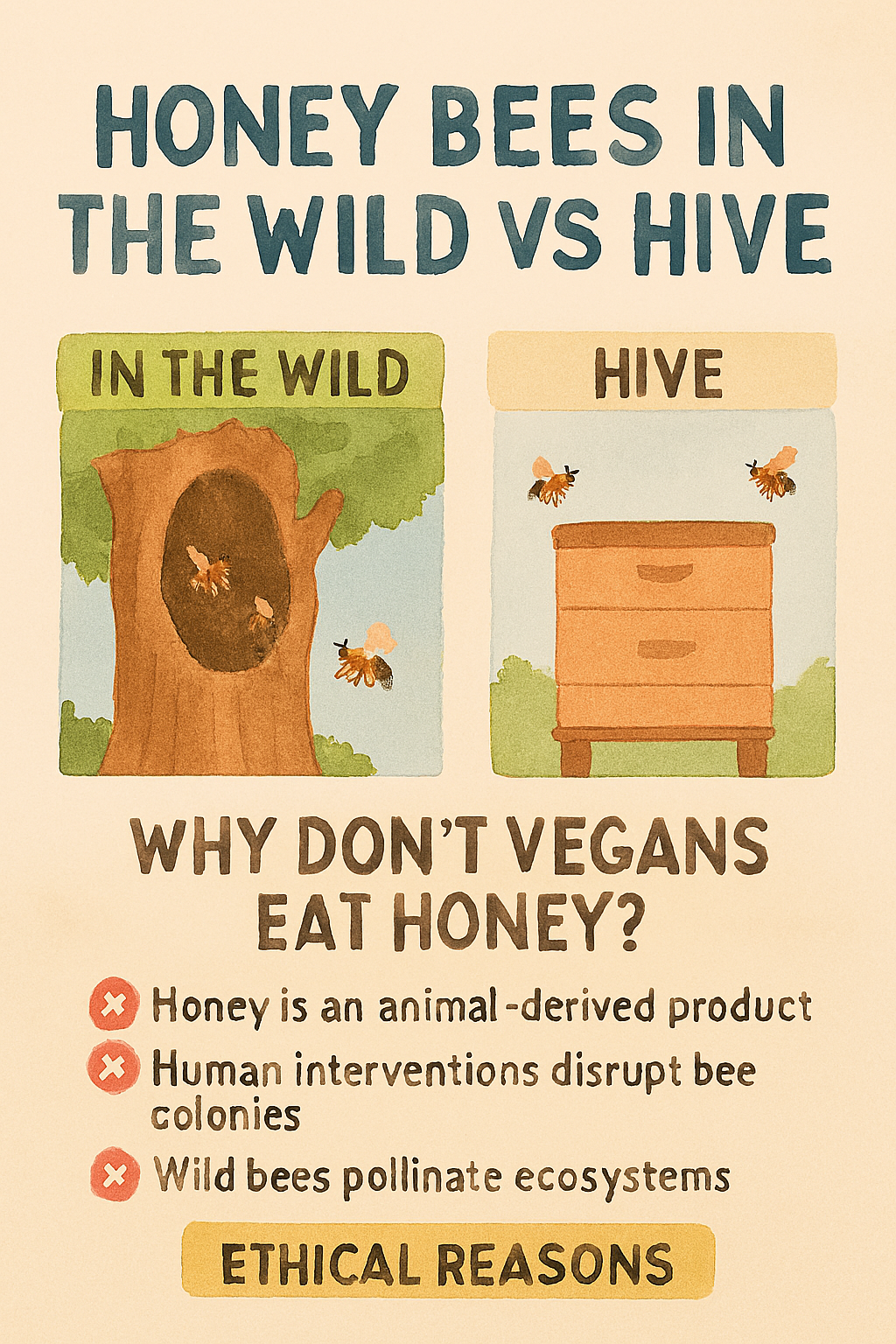
Wild honey bees build their own nests in natural cavities like hollow trees or rock crevices. Their lives are shaped by instinct, ecology, and freedom:
- Nest selection: Bees choose safe, elevated sites without human interference
- Natural comb building: They produce wax and shape combs to suit their colony’s needs
- Diverse foraging: Wild bees collect nectar and pollen from a wide range of native plants
- Self-regulation: Colonies swarm naturally to prevent overcrowding
- Ecological balance: They face predators, weather, and competition — but contribute to biodiversity
- Honey for the colony: Wild bees use their honey to feed the queen, nourish larvae, and survive winter — it’s never harvested
🏠 Life of a Honey Bee in a Managed Hive
Managed bees live in artificial hives maintained by beekeepers, often for honey production or crop pollination. Their lives are shaped by human intervention:
- Boxed living: Bees are housed in wooden hives, often moved between farms
- Selective breeding: Queens may be replaced or bred for productivity
- Monoculture foraging: Bees often pollinate single crops, limiting diet diversity
- Supplemental feeding: Sugar water may replace harvested honey
- Hive sedation: Bees are sometimes gassed with smoke or CO₂ to calm them during inspections or honey extraction
- Queen wing clipping: To prevent swarming, some beekeepers clip the queen’s wings so she cannot fly away — since bees instinctively follow their queen, this keeps the colony in place
- Honey harvesting: In managed hives, honey is removed for human consumption, and bees may be fed sugar substitutes instead
- Human intervention: Practices include mite treatments, artificial insemination, and hive relocation
🌱 Why Vegans Don’t Eat Honey
Vegans avoid honey because it’s an animal-derived product that involves human use of bees for profit. Ethical concerns include:
- Honey removal: Bees produce honey for winter survival — harvesting it can leave them vulnerable
- Queen manipulation: Artificial insemination and wing clipping
- Commercial stress: Prioritising yield over bee welfare
- We don’t need honey — but bees do: Humans have countless sweet alternatives, while bees rely on honey for energy, nutrition, and survival
🌍 Why Bees Belong in the Wild
The greatest gift bees give humanity is not honey — it’s pollination. Wild bees:
- Pollinate food crops: Around one‑third of the food we eat depends on bee pollination
- Support biodiversity: Wild bees sustain native plants, which in turn support birds, mammals, and ecosystems
- Strengthen resilience: Diverse wild bee populations are more resistant to disease and climate change than managed hives
- Provide more value than honey: The economic and ecological worth of pollination far outweighs honey production — without wild bees, food systems would collapse
Keeping bees in the wild ensures they can thrive naturally and continue their vital role as pollinators, which benefits all life on Earth.
🍯 Natural Sweet Alternatives (No Bees Needed)
Looking for sweet, healthy swaps that align with ethical and plant-based values? Try these:
- Dates: Naturally sweet, rich in fibre and minerals — perfect for baking or blending
- Maple syrup: Tapped from trees, vegan-friendly, and full of antioxidants
- Agave nectar: A smooth, neutral sweetener from the agave plant
- Coconut blossom nectar: Low glycaemic and rich in minerals
- Date syrup: Deep flavour, ideal for porridge or pancakes
- Molasses: A by-product of sugarcane, rich in iron and calcium
- Fruit purées: Apples, bananas, or berries can sweeten recipes naturally
- Stevia or monk fruit: Plant-derived, calorie-free options for drinks and baking
💚 Final Thought
Honey bees are extraordinary — whether living freely in the wild or working within a hive. For vegans, choosing not to consume honey is about respecting their autonomy and supporting natural ecosystems. It’s not about judgment — it’s about compassion. And with so many plant-based sweeteners available, it’s easier than ever to make kind, delicious choices.
Disclaimer: This blog is intended for general informational and educational purposes only. While every effort is made to ensure accuracy, details about bee conservation, pollination, and environmental practices may change over time. Readers should verify information with official sources, local authorities, or scientific publications before making agricultural, ecological, or lifestyle decisions. The content does not constitute professional, financial, medical, or legal advice, and any recommendations are shared for general guidance only.