
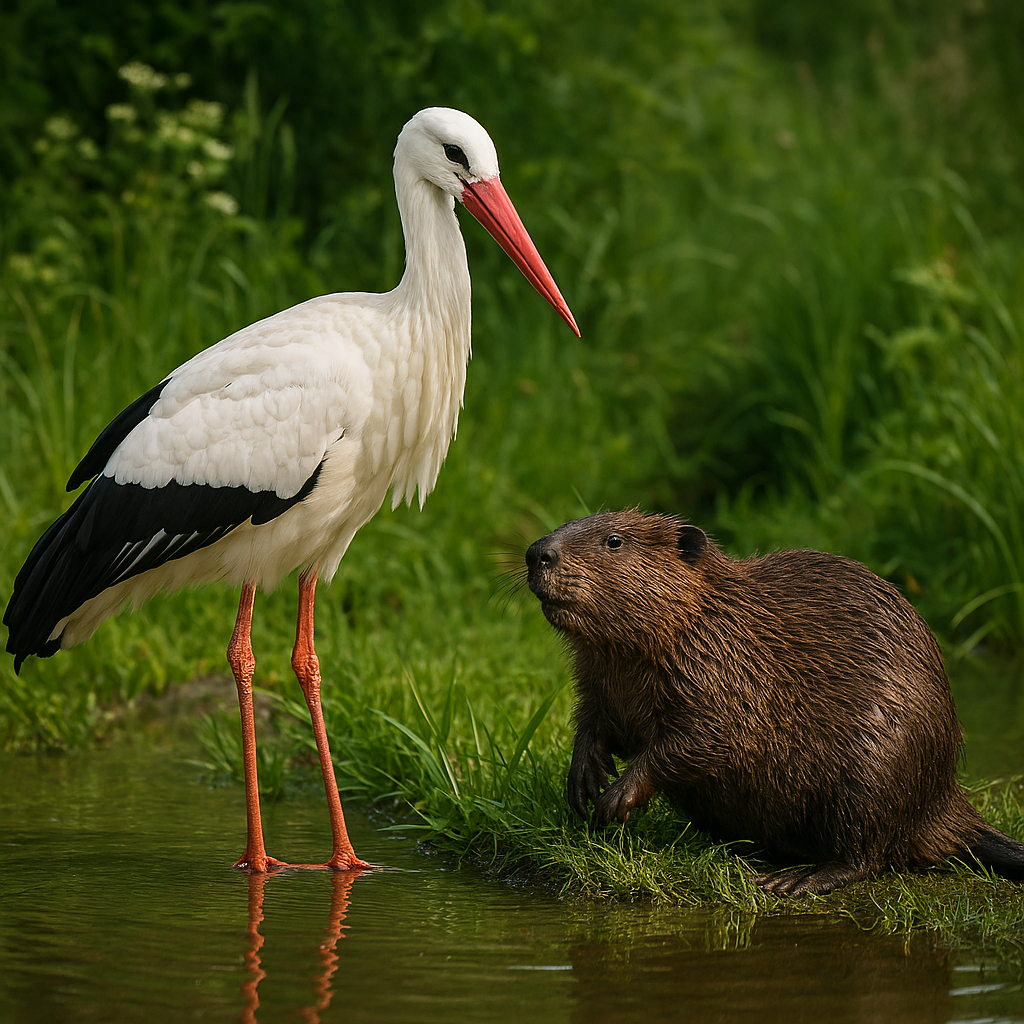
London is about to experience one of the most exciting ecological transformations in its modern history. Thanks to a major rewilding initiative led by Mayor Sadiq Khan, white storks and beavers are set to return to East London for the first time in hundreds of years — a milestone moment for biodiversity, climate resilience, and anyone who cares about compassionate coexistence with wildlife.
This isn’t a distant dream. It’s happening from next year, and the groundwork is already underway.
🌿 Why Rewilding, and Why Now?
According to the Mayor’s office, London has become a place where nature is finally being given room to breathe again. The city has invested heavily in restoring wetlands, meadows, and waterways — the kinds of habitats that once supported rich wildlife populations.
- White storks, native to England but extinct here since the 15th century, will be reintroduced to Eastbrookend Country Park in Barking.
- Beavers, already successfully reintroduced in Enfield and Ealing — where baby kits were born last year for the first time in over 400 years — will also be released into the same area.
This is part of a wider environmental programme funded through the Mayor’s Green Roots Fund, which has committed £3.48 million to 26 environmental projects, with more than £12 million planned over three years to help nature thrive across London’s communities.
🕊️ The Return of the White Stork
The last time white storks nested in London, Henry VIII was still a child. Their return is more than symbolic — it’s a sign of ecological recovery.
The new breeding colony will be established at Eastbrookend Country Park, a former landfill site transformed into a landscape of wet meadows and pastures. This habitat restoration has been supported by the Mayor to ensure the birds can flourish.
The project is being delivered with the help of the London Wildlife Trust and Barking & Dagenham Council, backed by £500,000 of targeted investment.
🦫 Beavers: London’s New Water Engineers
Beavers are one of nature’s most effective climate‑resilience partners. Their dams slow water flow, reduce flood risk, create wetlands, and support countless other species.
After successful reintroductions in Enfield and Ealing — including the birth of kits for the first time in centuries — the next colony will be established in Barking as part of the same rewilding programme.
This marks the first time in living memory that East London will host wild beavers.
🌱 What This Means for Londoners
Rewilding isn’t just about animals — it’s about rebuilding ecosystems that support cleaner air, healthier soil, and more resilient communities.
For anyone passionate about plant‑based living, sustainability, or compassionate coexistence, this project is a powerful example of what cities can achieve when they prioritise nature.
Benefits include:
- More biodiversity and healthier ecosystems
- Natural flood management thanks to beaver activity
- Educational opportunities for children and communities
- A shift toward nature‑positive urban planning
- A living example of rewilding in action
It’s a reminder that even densely populated cities can become havens for wildlife when political will and community support align.
🗓️ When Will It Happen?
The timeline is already in motion:
- White storks will return next year, marking their first appearance in London in around 600 years.
- Beavers will be reintroduced as part of the same programme, supported by the Mayor’s Green Roots Fund and local conservation partners.
- The wider rewilding investment continues through a three‑year funding cycle, running across multiple London boroughs.
This means Londoners will begin seeing the impact of these projects from 2026 onward, with long‑term ecological benefits unfolding over decades.
🌍 A Hopeful Step Toward a Wilder Future
At a time when biodiversity loss dominates global headlines, London’s rewilding initiative is a rare and uplifting story. It shows what’s possible when cities commit to restoring nature rather than simply containing it.
For your vegan audience, this is a perfect example of compassion in action — a city choosing to make space for other species, honouring its ecological history, and investing in a greener, kinder future.




One comment on “London Going Wild: Storks and Beavers Return After Centuries”