When governments and industry leaders talk about “precision breeding” in farm animals, they frame it as innovation: a way to make livestock more resilient, more productive, and better suited to modern agriculture. But let’s be clear — this technology is not about solving the bigger picture. It’s about propping up factory farming, keeping animals trapped in systems that exploit them, and deepening the very crises we face.
🏭 Factory Farming Reinforced
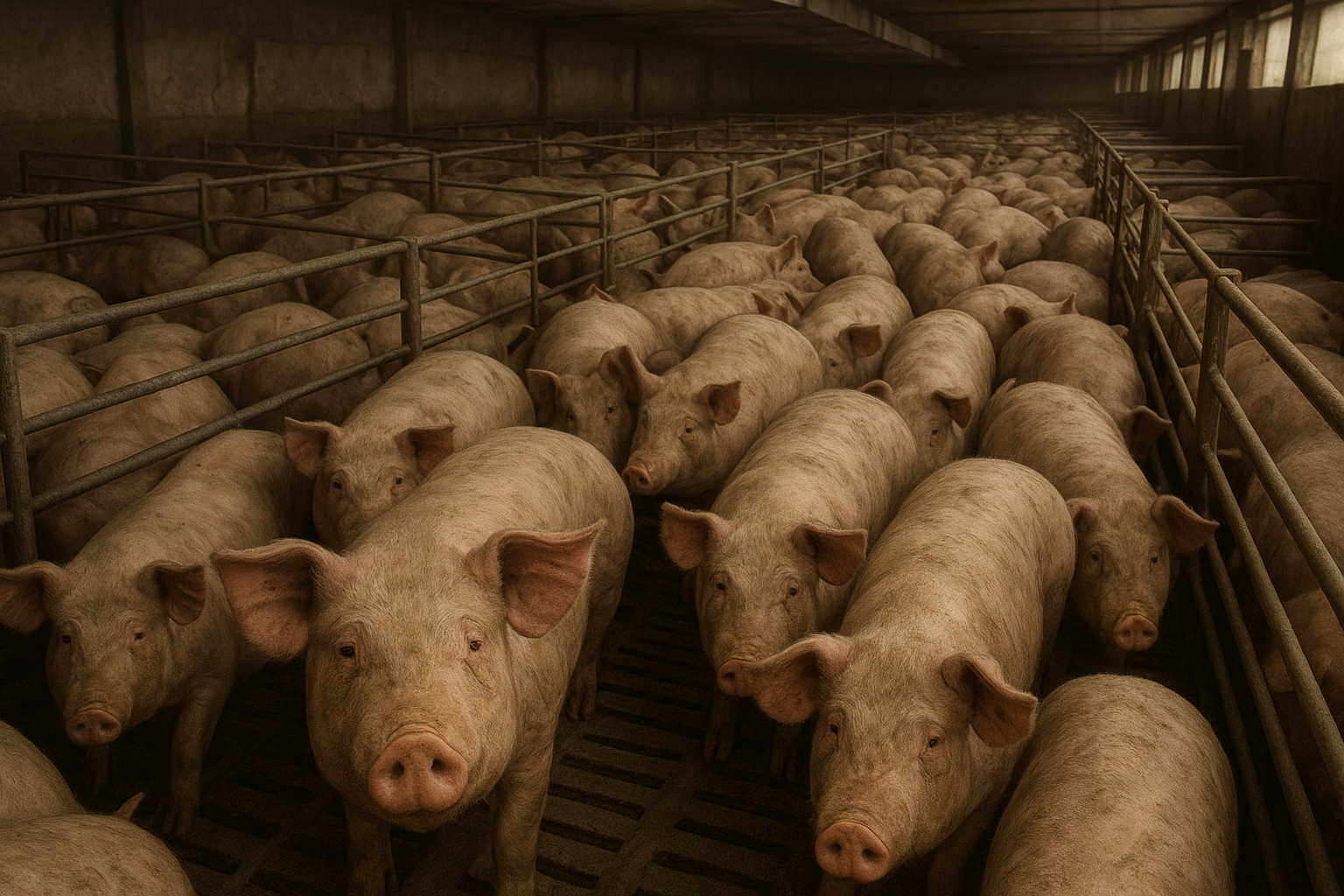
Precision breeding doesn’t dismantle intensive farming; it strengthens it. By editing DNA to make animals resistant to disease or more tolerant of crowded conditions, it allows factory farms to continue operating at scale. Instead of questioning whether it’s ethical to keep sentient beings in such environments, the system doubles down, reshaping animals to fit the cage rather than changing the cage itself.
🌍 Climate Change Ignored
Animal agriculture is a leading driver of greenhouse gas emissions, deforestation, and biodiversity loss. Precision breeding does nothing to address these root causes. In fact, by making factory farming more “efficient,” it risks expanding production and worsening climate impacts. The bigger picture — reducing reliance on animal farming altogether — is sidelined in favour of short-term profit.
🐑 Animal Welfare Compromised
Even if precision breeding reduces certain diseases, it doesn’t change the fundamental reality: animals are bred, confined, and slaughtered for human use. Welfare issues like overcrowding, stress, and unnatural lifespans remain. Editing DNA cannot erase the suffering inherent in factory farming.
🌱 Why It’s a Vegan Issue
For vegans, the principle is simple: animals are not commodities. Precision breeding treats them as raw material to be engineered for human convenience. It reinforces exploitation rather than challenging it. This is why the Vegan Society and other advocates highlight precision breeding as a warning sign — a reminder that technological fixes cannot replace ethical change.
✨ Veganism: The Right Direction
While precision breeding props up factory farming, veganism points the way forward. Plant-based systems tackle the bigger picture:
- Climate change: reducing emissions and land use.
- Animal welfare: ending exploitation altogether.
- Public health: lowering risks of zoonotic disease and antibiotic resistance.
Choosing veganism is not just a personal lifestyle; it’s a systemic solution. It moves us away from factory farming and toward a food system that respects animals, people, and the planet.
Conclusion: Precision breeding may sound like progress, but it’s really a way of keeping factory farming alive. It ignores climate change, compromises animal welfare, and entrenches exploitation. Veganism, by contrast, is a genuine step in the right direction — a move away from animal farming and toward a sustainable, compassionate future.
This blog is intended for informational and educational purposes only. While every effort is made to ensure accuracy, details about Black Soldier Fly farming, sustainability practices, and industry applications may change over time. Readers should verify information with official sources, manufacturers, or agricultural authorities before making business, dietary, or environmental decisions. The content does not constitute financial, nutritional, or legal advice, and any recommendations are shared for general guidance only.