
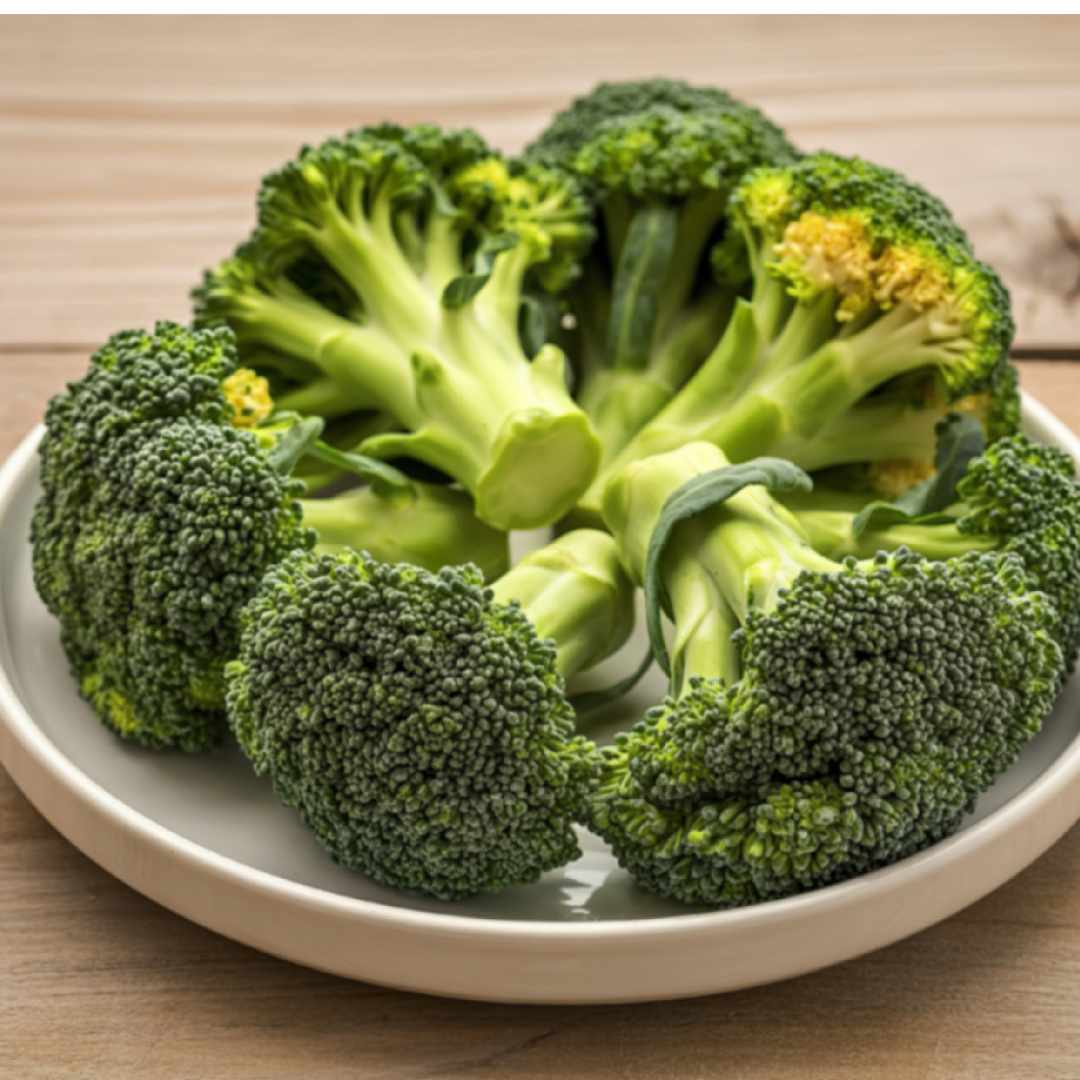
Every so often, social media decides to reinvent history — and lately, broccoli has become the latest victim. You may have seen posts claiming that broccoli is a “new human invention,” created only in the last century, or that it didn’t exist until modern agriculture engineered it.
It’s a dramatic claim. It’s also completely false.
Broccoli has a long, fascinating history stretching back thousands of years. Far from being a modern creation, it’s one of the oldest cultivated vegetables in the Mediterranean world. Let’s break down where broccoli really comes from and why the myth doesn’t hold up.
Broccoli’s Roots Go Back Over 2,000 Years
Broccoli belongs to the species Brassica oleracea — the same ancient plant family that gave us cabbage, kale, cauliflower, and Brussels sprouts. Humans didn’t “invent” broccoli out of nowhere; they selectively bred it from wild cabbage, a plant that grew naturally along the Mediterranean coastline.
This selective breeding began more than 2,000 years ago, long before modern science, industrial farming, or genetic engineering existed.
🇮🇹 The Etruscans: Early Masters of Plant Breeding
The earliest known cultivators of broccoli were the Etruscans, an ancient Italian civilisation that thrived before the Roman Empire. They were skilled agriculturalists who experimented with wild plants to create more productive, tasty, and nutritious crops.
Broccoli was one of their successes — a carefully developed vegetable prized for its edible flowering heads.
So no, broccoli wasn’t created in a lab. It was created by ancient farmers using simple, traditional methods.
Broccoli Was a Roman Favourite
By the time the Roman Empire rose to power, broccoli was already well‑established. Roman writers described cabbage‑like vegetables that match broccoli’s characteristics, and it was valued for both flavour and health benefits.
If Romans were eating broccoli more than 1,500 years before the first smartphone, it’s safe to say it’s not a modern invention.
🇬🇧 Why Some People Think Broccoli Is “New”
Broccoli didn’t reach northern Europe until the 1700s, when it was introduced to England as “Italian asparagus.” It was unfamiliar to the English palate, so it took time to catch on.
This late arrival in certain regions is one reason people mistakenly think broccoli is recent. But “new to England” is not the same as “new to humanity.”
🇺🇸 Broccoli Arrived in America in the 1700s
Broccoli seeds were brought to the United States by Italian immigrants, and even Thomas Jefferson grew it in his garden. It didn’t become widely popular until the 20th century, but again — late popularity doesn’t mean late invention.
Part of a Much Older Family Tree
Broccoli is one branch of a huge family of vegetables humans have cultivated for millennia. Through selective breeding of wild cabbage, ancient farmers created:
- Broccoli
- Cauliflower
- Kale
- Cabbage
- Brussels sprouts
- Kohlrabi
These vegetables are proof of human ingenuity long before modern science — not evidence of recent invention.
So Why Does the Myth Spread?
A few reasons:
- People confuse “selective breeding” with “genetic engineering.”
- Many assume that if a vegetable wasn’t eaten in medieval England, it must be new.
- Viral posts reward shock value over accuracy.
- There’s a general misunderstanding of how ancient agriculture worked.
But the truth is simple: humans have been shaping plants for thousands of years. Broccoli is just one example of that long, natural process.
The Bottom Line
Broccoli is not a modern invention. It’s not a lab‑created vegetable. It’s not a recent addition to the human diet.
It’s an ancient, Mediterranean crop with roots stretching back over two millennia — cultivated by early farmers, enjoyed by the Romans, and eventually shared with the world.
So the next time someone claims broccoli is “new,” you can confidently tell them it’s older than most countries, older than most religions, and older than nearly every food trend we know today.




One comment on “Is Broccoli Really a Modern Invention? Let’s Debunk This Viral Myth”
Comments are closed.