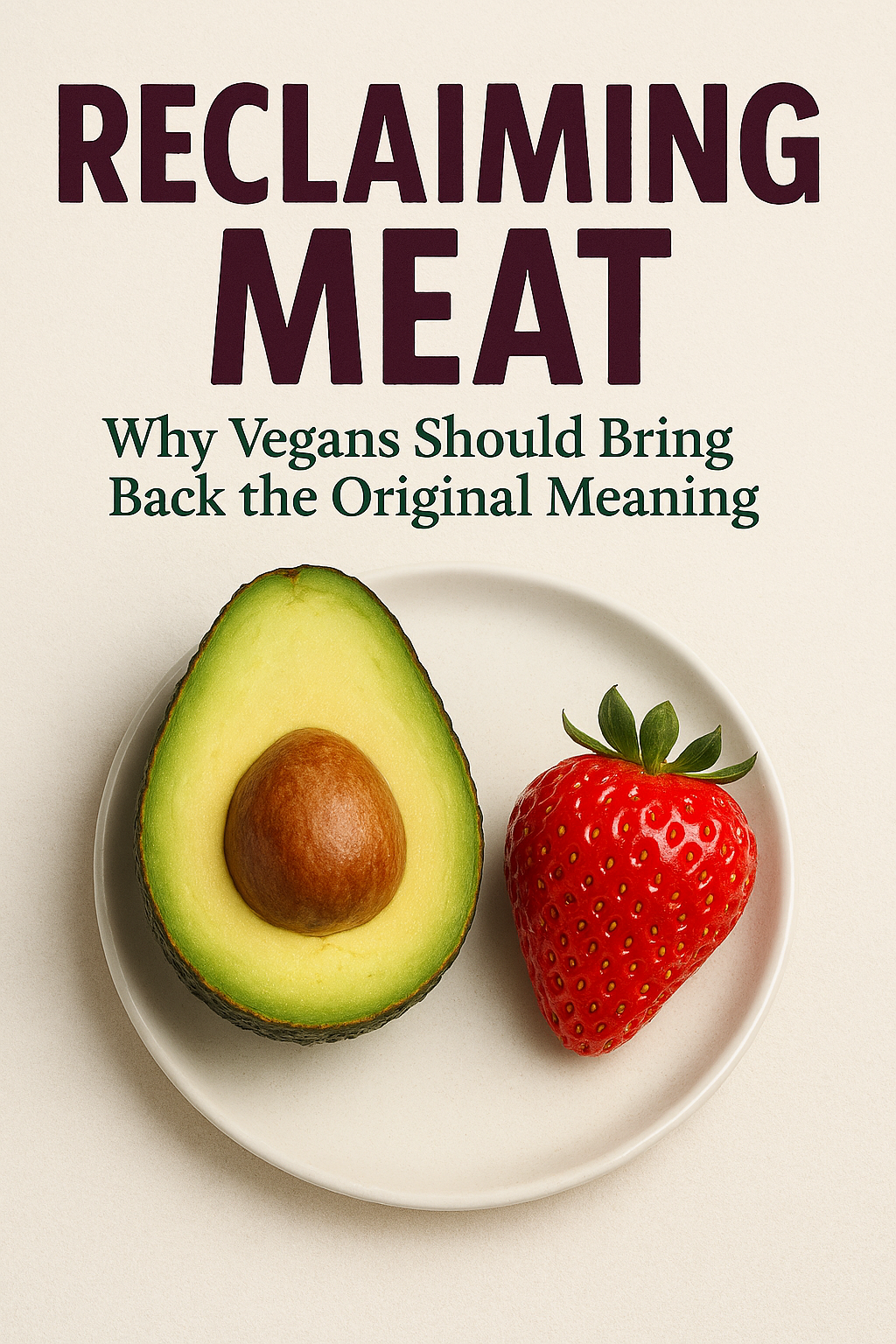
Language is alive. It grows, shrinks, twists, and reforms itself depending on who uses it and why. But sometimes, a word’s journey tells us more about power and politics than about grammar. The word meat is one of those words — and its history reveals just how absurd Europe’s attempts to police vegan language really are.
Let’s take it back to the beginning.
📜 The Real History of Meat
For most of English history, meat didn’t mean animal flesh at all. In Old English, the word was mete, and it simply meant food — any food. Bread was meat. Fruit was meat. Vegetables were meat. A meal was “meat and drink,” meaning “food and drink.”
- Old English mete meant nourishment, sustenance, or a meal.
- Proto‑Germanic roots show the same meaning across the language family.
- Cognates in Norse and German also meant food in general.
Animal flesh had its own word: flesh. If medieval people wanted to specify animal flesh, they said flesh-meat — because meat alone wasn’t specific enough.
This older meaning still survives in a few quirky corners of English:
- sweetmeats — sugary treats
- mincemeat — originally fruit and spices
- meat and drink — meaning “basic necessities”
So when someone says “meat has always meant animal flesh,” they’re simply wrong. Historically, meat was the most vegan-friendly word imaginable.
📖 What the Bible Actually Says
Here’s where it gets even more interesting.
When the Bible uses the word meat in older English translations, it does not mean animal flesh. It means food — exactly as Old English intended.
- “My meat is to do the will of Him who sent me” — meaning my food, my sustenance.
- “Give us this day our daily bread” is sometimes glossed as “daily meat,” again meaning food.
When the Bible refers to animal flesh, it uses the word flesh — not meat.
So if anyone wants to argue that vegans shouldn’t use “meat,” the Bible itself disagrees. Historically, meat belongs to everyone who eats food, not just those who eat animals.
🇪🇺 Why This Makes Europe’s Vegan Word Bans Look Ridiculous
Europe has spent years trying to stop vegans from using words like:
- burger
- sausage
- milk
- cheese
The justification is always the same: “consumers might get confused.”
But here’s the irony:
The only people misusing the word meat are modern regulators.
If we followed the historical meaning, vegans would have the strongest claim to the word. Plant-based food is literally closer to the original definition of meat than animal flesh is.
The EU’s position becomes even more absurd when you realise:
- Language changes constantly — and always has.
- Consumers aren’t confused — nobody thinks an oat sausage contains a pig.
- The bans protect industry, not clarity — it’s economic protectionism dressed up as semantics.
Reclaiming meat exposes the silliness of the whole debate.
🌿 Why Vegans Should Bring Back the Original Meaning
Reclaiming meat isn’t just cheeky — it’s historically accurate, culturally powerful, and politically subversive.
Here’s what it achieves:
- It reframes the conversation: meat = food, not animals.
- It highlights linguistic history: vegans aren’t changing language — they’re restoring it.
- It undermines restrictive labelling laws: if meat means food, plant-based meat is the truest meat.
- It challenges cultural assumptions: animal flesh becomes the exception, not the default.
- It opens creative possibilities, especially in folklore, children’s books, and food writing.
Imagine a world where:
“Plant meat” simply means “plant food,” and “animal flesh” is called what it is.
That’s not radical. That’s just English returning to its roots.
🌱 A Call to Action
Vegans don’t need permission to use the word meat. We already have history, linguistics, and scripture on our side.
So let’s reclaim it.
Let’s remind people that meat once meant nourishment, not slaughter. Let’s use the word in its original, inclusive, plant-friendly sense. Let’s show how absurd it is for regulators to police language they barely understand.
Because if anyone is using the word meat incorrectly today, it’s not vegans.